Bone Health and Strength Training After 40
Bone Health and Strength Training: What You Need to Know as You Age
Many people do not think about bone health until it’s too late. A misstep leads to a fall, and the fall leads to a broken bone, and the doctor says the dreaded words, “You have osteoporosis.”
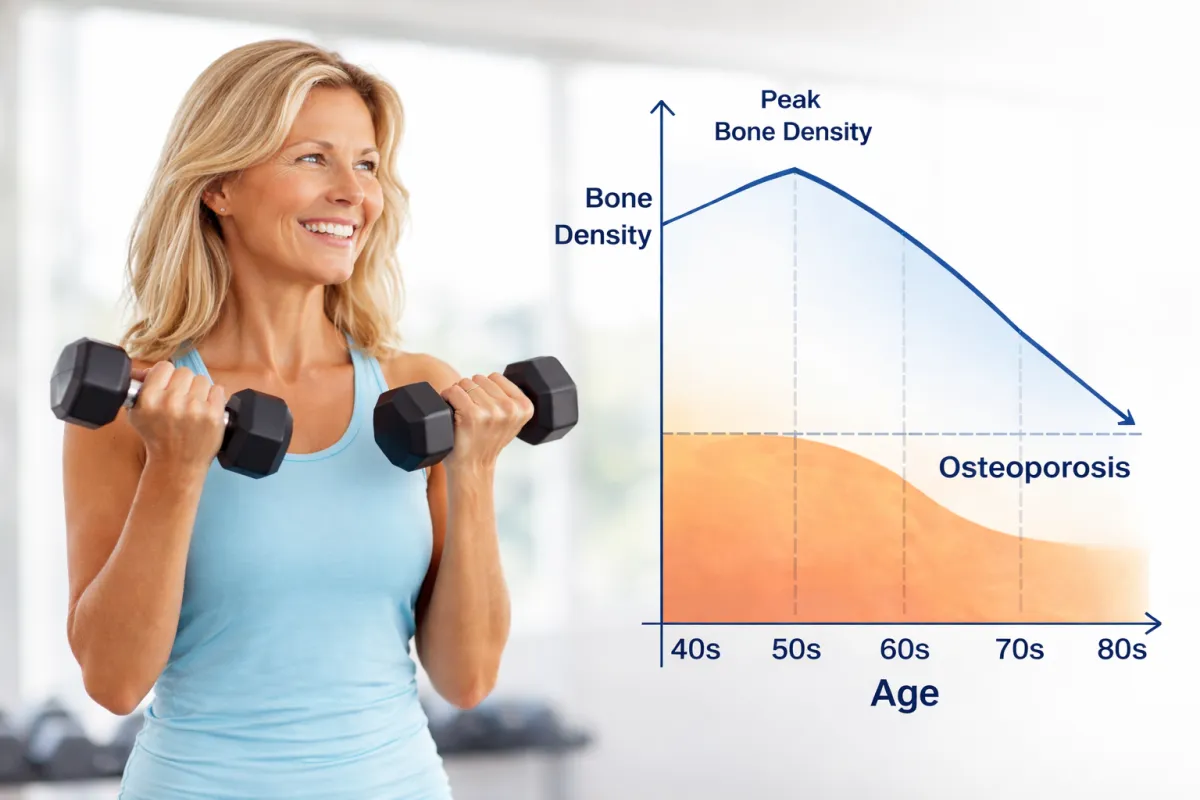
The loss of bone density is not an overnight occurrence; actually, it’s quite the opposite. Bone loss often starts years before you feel any pain or notice any problems. Learning how bones change as we age can help you stay strong and avoid injuries later in life.
Strength training plays a big role in keeping bones healthy. It is one of the few things that can actually help bones stay strong as you get older.
What Are Osteopenia and Osteoporosis, and Who Is at Risk?
Osteopenia and osteoporosis both simply mean that bones are getting weaker. Bone density is how strong and solid your bones are. Osteopenia means bone density is lower than normal. Osteoporosis means bones are much weaker and can break more easily.
Who is at risk of developing osteoporosis? Well, women are 4x more likely to develop osteoporosis than men. Why is that, you might ask? The simple answer is that after menopause, women make far less estrogen than before, and estrogen plays an important role in bone health. This lack of estrogen is one main cause of women developing osteoporosis.
Here are five things that increase your chances of developing osteoporosis:
Being female and over age 40, especially during or after menopause
Not doing regular strength or resistance training
Not eating enough protein
Having a family history of osteoporosis or fractures
Low muscle mass or loss of strength with age
How many of these risk factors do you hit???
Don’t throw in the towel. There is actually a scientifically proven way to improve bone density.
How Strength Training Helps Build Bone Health
Bones are living tissue, just like muscle. They change based on how you use them.
When you lift weights, your muscles pull on your bones. This pulling sends a signal to your body that your bones need to be strong. Your body responds to that signal by adding strength to the bones.
If bones do not get this signal, the body thinks strong bones are not needed. Over time, bones can become weaker and weaker and become at risk for things like breaks and fractures from even the smallest trips or falls.
Strength training also helps with your balance, which lowers your risk of falling in the first place. Think of strength training as prevention and protection.
What Type of Strength Training Builds Bone Density
Walking is good for your heart and mental health, but it is not enough to build strong bones.
Bones need resistance to get stronger. This means lifting weight or resistance training in a manner that puts external load on the body.
Strength training that helps bone health includes movements like squats, lunges, step-ups, presses, rows, and carrying weight.
These exercises put stress on the hips, legs, arms, and spine, which are the most common places where bones can break as you age.
The weight should feel challenging but safe. Over time, the weight should slowly increase. This continues signaling to the bones to keep getting stronger in order to adapt to the resistance training.
Strength training three to four times per week, focusing on all areas of the body, is ideal for people who are aiming to avoid or treat osteoporosis.
Take Away
Bone loss is common, but it is not unavoidable. Strength training is a great tool you can use to protect your bones and keep doing the things you love with the ones you love!
Curtis & Jalea
The Lifting Studio


